CRJDS Centre for Reproductive Justice
and Disability Studies

Centre for Reproductive Justice and Disability Studies · India

Rights,
not charity.

Reproductive justice, dignity and autonomy for persons with disabilities in India.

Why CRJDS

Every day, disabled people in India are offered charity when what they need is rights.

  • A wheelchair handed over for the camera.
  • A child admitted to school as a favour.
  • A body whose choices are made by others.

CRJDS exists to change this. We bring lived experience and law together to fight for dignity, autonomy and reproductive justice.

Lived Experience First-person accounts of disability in India, told on our own terms. Read the stories Law and Policy The CRPD, the Constitution, the RPwD Act and the courts, read for what they promise and where they fall short. Read the analysis Know Your Rights Reproductive rights for persons with disabilities, explained in plain language. See your rights

Find Help

Where are you right now?

Choose the stage closest to your life. Each one answers the questions people ask most, in plain language, with links to the official source.

Your child is not a burden. They have rights, there is support, and many families have walked this road before you.

Where do I start?

Start early. Under the Rashtriya Bal Swasthya Karyakram (RBSK), children from birth to 18 are screened for developmental delays and disabilities. Children up to six are supported through District Early Intervention Centres, and treatment after referral is free. Ask your ASHA worker, your Anganwadi centre or your district hospital.

National Health Mission, RBSK

How do I get a disability certificate and UDID card?

Apply online on the Swavlamban (UDID) portal. A medical authority notified by your state assesses your child and issues the disability certificate and the Unique Disability ID card. You can track the application on the same portal.

Most schemes ask for this card, and many need a disability of 40% or more, which the law calls a benchmark disability.

Department of Empowerment of Persons with Disabilities; RPwD Act 2016, s. 2(r)

Which school can my child go to?

Every child with a benchmark disability aged 6 to 18 has the right to free education, in a neighbourhood school or a special school of the family's choice. Schools run or recognised by the government must admit children with disabilities without discrimination and give them the support they need.

RPwD Act 2016, ss. 16 and 31

My child has autism, cerebral palsy, an intellectual disability or multiple disabilities. Is there specific support?

Yes. The National Trust runs schemes for these four disabilities, including Disha for early intervention from birth to age 10, and Niramaya, a health insurance cover of up to ₹1 lakh for enrolled beneficiaries.

National Trust, schemes at a glance

Will my child be able to study, work, marry and have a family?

The law says yes, and it protects each step: reserved seats in higher education, reserved posts in government jobs, and the right to make decisions about relationships and having children. Read the stories in Lived Experience and see Know Your Rights.

RPwD Act 2016, ss. 10, 32 and 34; CRPD, Art. 23

I feel overwhelmed. Who can I talk to?

That feeling is common, and you do not have to carry it alone. Tele-MANAS offers free counselling, 24 hours a day, on 14416. You can also write to CRJDS using the form at the end of this section. We are building a network of families and disabled mentors who have been where you are.

Ministry of Health and Family Welfare, Tele-MANAS

School should open doors for you. Here is what the law requires, and what to do when it does not happen.

A school refused admission because of my disability. What can I do?

Schools run or recognised by the government must admit children with disabilities without discrimination. Ask the school to give the refusal in writing.

Then complain to your State Commissioner for Persons with Disabilities, or to the Chief Commissioner if the school is run by the central government, such as a Kendriya Vidyalaya. There is no fee to complain to the Chief Commissioner, and hearings are online. Free legal aid is available on 15100.

RPwD Act 2016, s. 16(i); Chief Commissioner for Persons with Disabilities, FAQs

What support must the school give?

An accessible building, reasonable accommodation for your needs, individual support, and teaching in Braille or sign language where needed. Students with benchmark disabilities up to age 18 get books, learning materials and assistive devices free.

Under Samagra Shiksha, government schools can also provide aids and appliances, Braille and large-print books, resource teachers, home-based education for severe or multiple disabilities, and a stipend for girls with disabilities from Class 1 to 12.

RPwD Act 2016, ss. 16 and 17(g); Ministry of Education, Samagra Shiksha

Can I get extra time or a scribe in exams?

Yes. Government guidelines allow at least 20 extra minutes for every hour of the exam, and a scribe, either your own or one the exam authority provides. This applies to students with benchmark disabilities, and to students who find writing difficult and have a certificate from a government medical board. Tell the school well before the exam.

DEPwD guidelines for conducting written examinations for persons with disabilities

Is there a scholarship while I am in school?

The pre-matric scholarship covers Classes 9 and 10 for students with a benchmark disability whose family income is up to ₹2.5 lakh a year. Apply on the National Scholarship Portal. At least half the scholarships are reserved for girls.

DEPwD, Scholarships for Students with Disabilities, guidelines effective 1 April 2022

I am being bullied or left out. What should I do?

Tell a teacher or the principal, and write down what happened and when. If the school does not act, you can complain to your State Commissioner for Persons with Disabilities. If you are in danger, call 112. Children can also call the Child Helpline on 1098.

Money and paperwork should not decide whether you study. These are the routes that already exist.

Are there reserved seats in college?

Government and government-aided colleges and universities must reserve at least 5% of seats for persons with benchmark disabilities, and give an upper age relaxation of five years for admission.

RPwD Act 2016, s. 32

What scholarships can I get?

The post-matric scholarship covers Class 11 to postgraduate study, for family income up to ₹2.5 lakh a year. The Top Class Education scholarship covers graduate and postgraduate study at notified institutes, for family income up to ₹8 lakh. Both are on the National Scholarship Portal, and at least half are reserved for girls.

For a PhD, there is the National Fellowship for Persons with Disabilities. The government also funds free coaching for competitive and entrance exams.

DEPwD, Scholarships for Students with Disabilities, guidelines effective 1 April 2022, and scheme documents

I want to study abroad. Is that possible?

Yes. The National Overseas Scholarship for Students with Disabilities supports Master's and PhD study at foreign universities, including tuition and living costs. Eligibility rules change, so check the current form on the DEPwD website. CRJDS can guide you through the application.

DEPwD, National Overseas Scholarship scheme

Will I get extra time in college and entrance exams?

The same exam guidelines apply: at least 20 extra minutes per hour, and a scribe if you need one. Mention your disability when you fill in the application form, because accommodations are usually requested at that stage.

DEPwD guidelines for conducting written examinations for persons with disabilities

I need a device, like a wheelchair or a hearing aid.

Under the ADIP scheme, the Department of Empowerment of Persons with Disabilities helps people buy and fit aids and appliances. Ask your district social welfare office about the next distribution camp near you.

DEPwD, Assistance to Disabled Persons for Purchasing and Fitting of Aids and Appliances (ADIP)

Who can help me inside my college?

Ask whether your college has an Equal Opportunity Cell or a disability support office. If your college refuses an accommodation, the complaint routes under I need help now apply to you too.

If you are in danger, call 112 now. For everything else, these numbers are free.

  • 112

    Emergency

    Police, fire and ambulance, anywhere in India.

  • 15100

    Free legal aid (NALSA)

    Women and persons with disabilities are entitled to free legal services.

  • 14416

    Tele-MANAS mental health support

    Free and available 24 hours. Also on 1800-891-4416.

  • 181

    Women Helpline

    For women facing violence or abuse.

  • 1098

    Child Helpline

    For children in difficulty or danger.

Complaints about disability rights

Against the central government or its bodies: complain to the Chief Commissioner for Persons with Disabilities on the online grievance portal. There is no fee, you can file yourself or through a representative, and hearings are online.

Against a state government, its schools, hospitals or local bodies: complain to your State Commissioner for Persons with Disabilities. The list of State Commissioners is on the Chief Commissioner's website.

What to include: your details and a copy of your disability certificate, who you are complaining about, what happened and when, any documents, and what you want done.

Chief Commissioner for Persons with Disabilities, FAQs; NALSA

Last checked on 20 October 2026. Schemes, income limits and numbers change, so always confirm on the official website. CRJDS is not a government body, and this is general information, not legal advice.

Cannot find your answer? Ask us.

You can write in English or Hindi.

Add this if you want a personal reply.

About

Our mission

CRJDS works to make reproductive justice real for persons with disabilities in India. We move disability away from charity and pity, towards rights, dignity and autonomy.

Through lived experience, legal research and public advocacy, we work towards a society where every disabled person can decide about their body, relationships and family with dignity.

Research focus

India recognises reproductive rights in its Constitution, its disability law and its international commitments. Formal recognition alone does not protect reproductive autonomy. Our research asks whether the disabled woman herself is recognised as the rights-holder and decision-maker, and what that requires in terms of legal capacity, supported decision-making, informed consent and substantive equality.

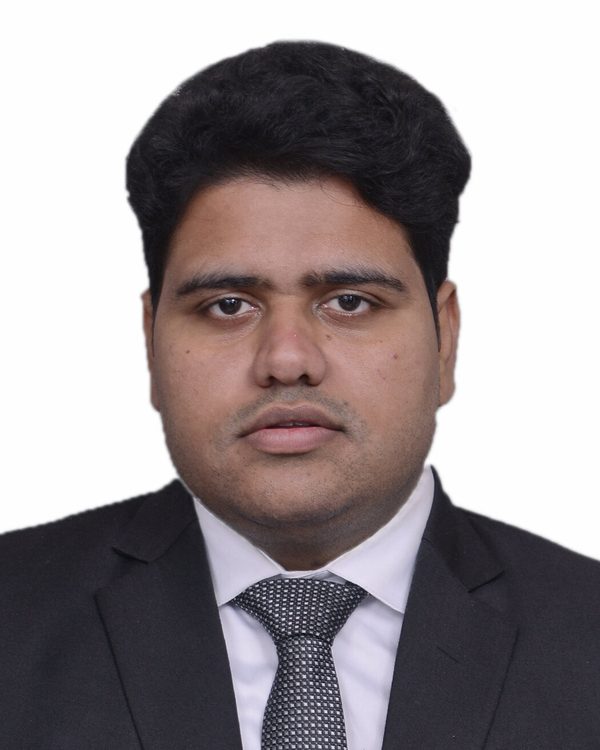
Salman Khan, founder of CRJDS

Founder

Salman Khan

Salman Khan is an advocate and doctoral researcher at the Faculty of Law, University of Delhi, working on the reproductive rights of women with disabilities. He holds an LL.M. in Human Rights from Queen Mary University of London and is a Disability Rights Research Fellow at the Deepstambh Foundation. A person with a locomotor disability himself, he founded CRJDS to bring lived experience and legal scholarship together.

Lived Experience

Disability is lived in staircases, classrooms, clinics and homes. These are first-person accounts and comment from CRJDS.

Lived experience · Salman Khan

Nobody ever threw me out

I was one and a half when polio came into my life. Childhood meant being carried on the backs of my parents, my brother, my neighbours. At home, I moved on my hands, even to reach a toilet that was never built for me.

Nobody ever threw me out of anywhere. But slowly, quietly, I was left outside. When I started school, some teachers refused to admit me, even though the law said I had a right to be there.

I now understand this is not just my story. It is the story of almost every disabled child in India. Disability is not only a condition. It becomes an identity that swallows every other identity you have.

And dignity? Dignity comes with independence. When life forces dependence on you, dignity is the first thing to go.

Comment · CRJDS

Systems, not saviours

A young girl with polio was seen hopping on one leg to school. The District Magistrate noticed her and gave her a wheelchair. The internet applauded.

But let us ask the harder question: why did she have to hop to school at all? Under the Rights of Persons with Disabilities Act, 2016, assistive devices and inclusive education are her legal right, not an act of kindness.

One child got help because a camera was there. How many others are still hopping, unseen?

Disability needs systems, not saviours. Rights, not charity.

Have a story of your own? Share it with CRJDS.

Blog

Reflections, essays and notes from CRJDS on disability, dignity and reproductive justice.

Blog · Salman Khan · 7 November 2026

When Disability Eats Away at Life

Sometimes it feels as if disability is eating away at your life, especially when it is visible, and when its impact is tied to how society marginalises you. You have one thought process, and in a single minute it hits you and finishes everything. All the things you have built, all the confidence you have gathered, suddenly feel like nothing.

I don't know why, but I often feel that if there were no disability in life, things would be different. Take marriage. For disabled people, there is so much exaggeration around the question of marriage. It becomes a bigger issue than it should be. Or perhaps we are made to feel this way. We are made to feel that we have not done things in life, that we have not achieved enough, that we are not capable.

And this is the real point. The disability itself is not always what hurts most. What hurts is the message that comes with it from society: that you are less, that you must prove more, that your life will always be measured against what you "could not" do. Slowly, that message stops coming only from outside. It enters your own thinking. Then one thought, in one minute, can undo years of effort.

Not "What is wrong with us?" but "Why does society make us feel incapable in the first place?"

I am writing this because I know I am not the only one who feels this. Many disabled people carry this silently. Perhaps saying it aloud is the first step to asking a better question.

Want to write for the CRJDS blog? Send us your piece.

Law and Policy

Where Indian and international law stands on the reproductive rights of persons with disabilities.

International law

UN Convention on the Rights of Persons with Disabilities

Ratified by India on 1 October 2007

Art. 12
Equal recognition before the law, including legal capacity on an equal basis with others and access to support in exercising it.
Art. 17
Respect for physical and mental integrity on an equal basis with others.
Art. 23
The right to decide freely and responsibly on the number and spacing of children, and to retain fertility on an equal basis with others.
Art. 25
Health care of the same range, quality and standard as others, including sexual and reproductive health.

Constitution

Constitution of India

Art. 14
Equality before the law and equal protection of the laws.
Art. 15
Prohibition of discrimination, including on grounds of sex.
Art. 21
Protection of life and personal liberty, read by the Supreme Court to include privacy and reproductive choice.

Statute

Rights of Persons with Disabilities Act, 2016

s. 10
Access to information on reproductive health and family planning; no medical procedure leading to infertility without free and informed consent.
s. 13
Legal capacity on an equal basis with others in all aspects of life.
s. 14
Limited guardianship, defined as joint decision-making based on mutual understanding and trust.
s. 25
Health care, including free care near home for families within a notified income limit.
s. 92(f)
Terminating the pregnancy of a woman with disability without her express consent is an offence, subject to a narrow statutory exception.

Courts

Key judgments of the Supreme Court

  • Suchita Srivastava v Chandigarh Administration (2009) 9 SCC 1. Reproductive choice is part of personal liberty under Article 21; the pregnancy of a woman with intellectual disability could not be terminated without her consent.
  • K.S. Puttaswamy v Union of India (2017) 10 SCC 1. Privacy is a fundamental right, extending to personal decisions including procreation.
  • X v Principal Secretary, Health and Family Welfare Department, Govt of NCT of Delhi (2022). Reproductive autonomy under the abortion law extends to unmarried women.

The gap we study

These guarantees exist on paper. In practice, guardians, doctors, institutions and sometimes courts still make reproductive decisions for disabled women, often in the language of "best interests". CRJDS follows these decisions and asks whether the law treats the disabled woman as the person who decides.

Commentary and case notes from CRJDS will be published here.

Know Your Rights

A plain-language guide to reproductive rights for persons with disabilities in India.

Your body, your decision

No doctor, family member or institution can subject you to a procedure that causes infertility, such as sterilisation or hysterectomy, without your free and informed consent.

RPwD Act 2016, s. 10(2)

A pregnancy cannot be ended without your consent

Ending the pregnancy of a woman with disability without her express consent is a criminal offence, with only a narrow exception in the law. The Supreme Court has held that reproductive choice is part of personal liberty.

RPwD Act 2016, s. 92(f); Suchita Srivastava (2009)

You have a right to information

The government must make sure you can get proper information about reproductive health and family planning.

RPwD Act 2016, s. 10(1)

You decide, with support if you want it

Your legal capacity is equal to everyone else's. Support is there to help you make your own decision.

RPwD Act 2016, s. 13; CRPD, Art. 12

Health care on equal terms

You are entitled to health care on the same terms as others, including sexual and reproductive health care.

RPwD Act 2016, s. 25; CRPD, Art. 25

If your rights are violated

You can complain to the Chief Commissioner or your State Commissioner for Persons with Disabilities. Women and persons with disabilities are entitled to free legal aid through Legal Services Authorities. The national legal aid helpline is 15100.

RPwD Act 2016, ss. 75 and 80; Legal Services Authorities Act 1987, s. 12

This guide is general information, not legal advice. For advice on your situation, contact a lawyer or your District Legal Services Authority.

Share Your Story

Tell us about a barrier you faced, a decision someone took for you, or a moment you claimed your rights. You can write in English or Hindi.

How should we credit you?

So we can check the edited version with you before it is published.

Please leave out details that identify other people without their consent.